
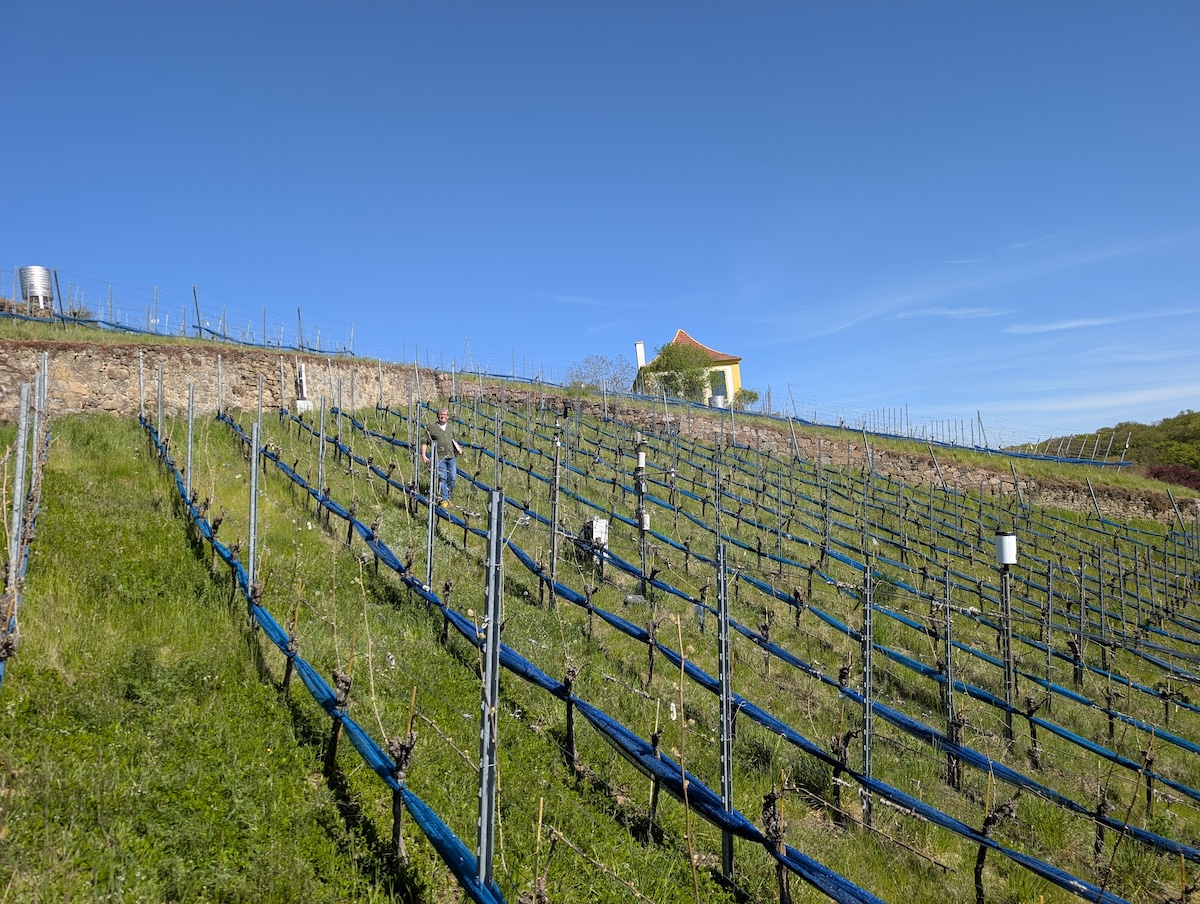

On the map, eastern Germany’s wine country looks small before it looks famous. Saale-Unstrut has more than 800 hectares under vine, scattered through the valleys of the Saale and Unstrut between Weimar and Leipzig. Saxony (Sachsen) has just over 500 hectares, much of it along the Elbe around Dresden, Radebeul and Meißen. Put together, they are still a minor part of Germany’s roughly 102,000 hectares of vineyard, but in the eastern part of the country they form a spectacular wine landscape: old, fragmented, local, and still much better known at home than abroad.
Most of its wine life in eastern Germany happens at close range. A large part of the crop is tied to local sales, co-operative structures, hobbyist growers, village taverns, regional restaurants and visitors who come for the landscape as much as the bottles. In Saale-Unstrut, many vineyards are cultivated by growers who deliver their grapes to cooperative cellars, and much of the wine is consumed locally. Saxony has a similarly small-scale structure, with many growers working very limited areas along the Elbe.
But once the question turns to the wine estates trying to measure themselves against Germany’s strongest producers, there is a practical signpost. Germany has a private association of quality-minded estates whose bottles carry the grape-eagle symbol on the capsule. Its full name is Verband Deutscher Prädikatsweingüter, usually shortened to VDP. Founded in 1910, it now brings together around 200 German wine estates. It is not a state classification and it doesn’t represent all the best wine in Germany, but membership is, well, very selective, built around stricter production standards, estate bottling, lower yields and a vineyard hierarchy that puts terroir and specific vineyards at the centre.
For us, this makes the VDP-marked capsules particularly useful in Saxony and Saale-Unstrut: in regions where much of the wine still stays local, the VDP estates are the ones most visibly working in the national quality conversation: classified sites, dry Grosses Gewächs wines, serious vineyard names, and a public ambition to be judged beside the best producers in the rest of Germany. And, for that matter, the world. This ambition is uber-important. Here, that group is very small: Schloss Proschwitz – Prinz zur Lippe, Klaus Zimmerling, Martin Schwarz, Pawis, Hey and Böhme & Töchter. They give a clear route into its most visible quality ambitions—through the families, vineyards, cellars and visitor experiences now trying to make eastern Germany’s wines legible beyond their local market.
International press has only recently started to look at eastern Germany with any real attention, while German-language coverage still tends to appear around harvest size, frost damage, regional tourism or local industry news rather than sustained critical discussion. That isn’t unusual for small regions, but it leaves a serious gap. While these places are not unknown at home; they are under-explained outside their immediate context.
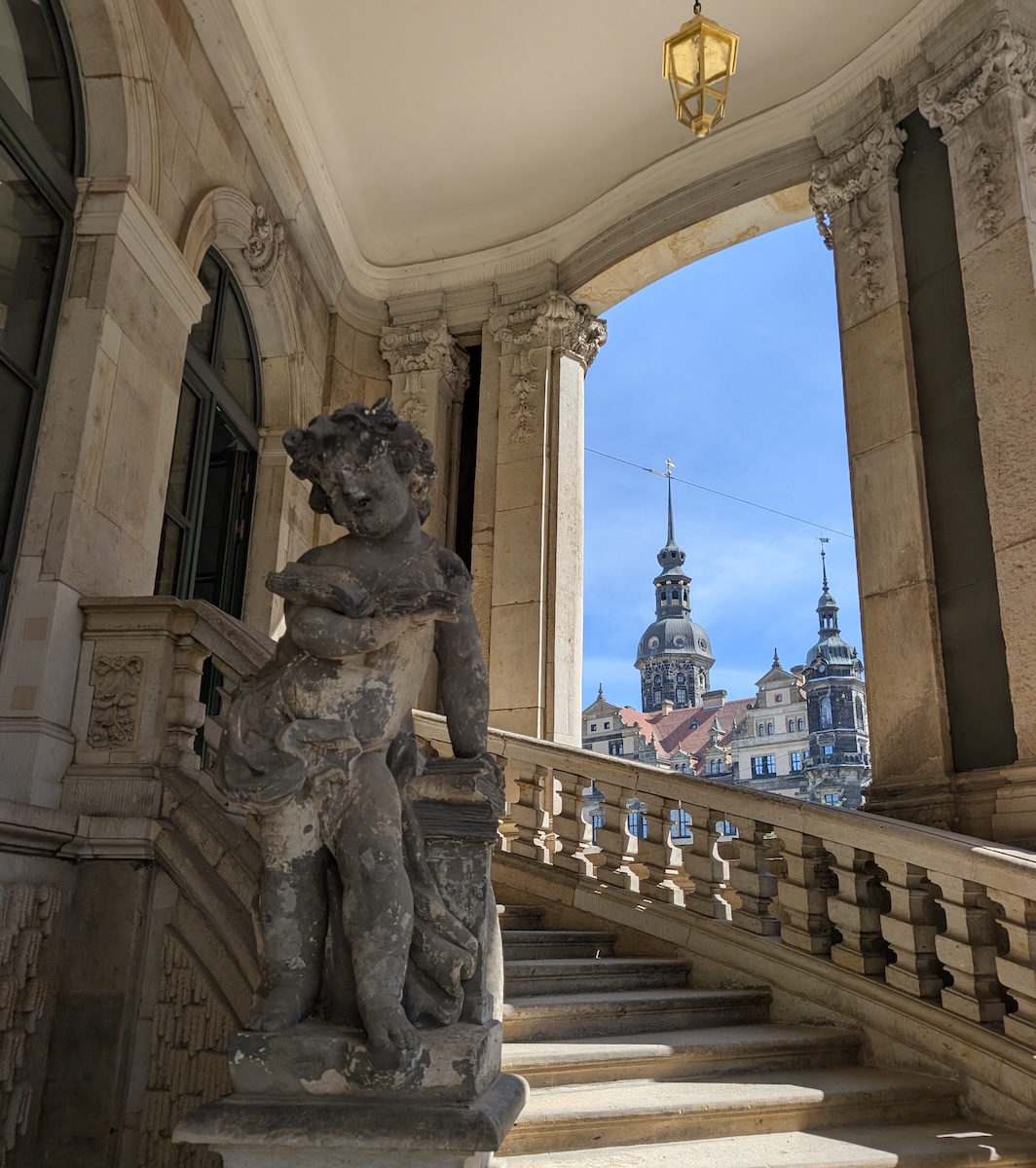
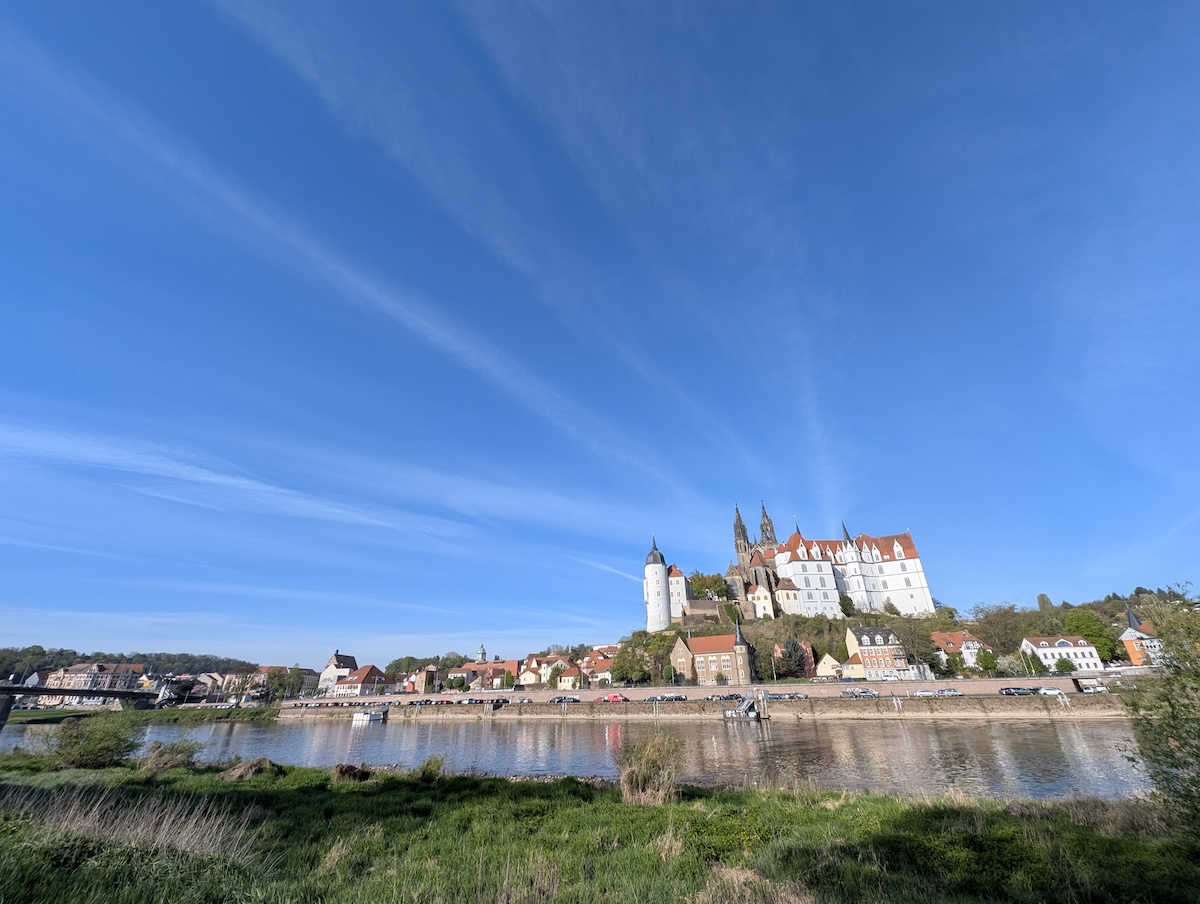
My visit to these wine regions makes the context clear before any wine is poured. Dresden, Pillnitz, Meißen, Naumburg and Freyburg don’t form a classic wine road in the way the Mosel or Pfalz can. The route moves through cultural landmarks as much as vineyards: church architecture in Dresden, porcelain, the river landscape of the Elbe, Schloss Pillnitz, terraced slopes near Meißen, the castle grounds of Proschwitz, then the Saale-Unstrut country around Naumburg and Freyburg. Wine is part of this landscape, but it is rarely isolated from everything around.
That’s why the usual “undiscovered eastern Germany” line doesn’t help much. Saxony and Saale-Unstrut have been known locally for a long time. What remains incomplete is their wider recognition as serious, exportable, critically discussable wine regions. The current VDP producers are useful: they provide names, sites and bottles through which the larger story can be understood without pretending that every producer, every village and every cooperative can be covered at once.
The current VDP group also shows how different the two regions are, even when they are discussed together. Saxony is tied to the Elbe river, Dresden and Meißen; Saale-Unstrut to the Saale and Unstrut rivers, limestone, Freyburg, Naumburg and the northern edge of German quality winegrowing. They sit together administratively inside the VDP, but they don’t work the same way in the glass. Saxony often feels more architectural and courtly, with terraced Elbe sites, castles, art and urban tourism close by. Saale-Unstrut is more limestone-driven, more rural, more directly connected to steep slopes, old farms, river valleys and regional food culture.
The useful question is therefore not whether these six estates “represent” every wine in eastern Germany. They don’t. The better question is what they reveal about the region’s current attempt to build recognized quality after a century in which continuity was repeatedly broken.
Old regions, interrupted story
Viticulture in both regions reaches back many centuries. Saale-Unstrut often describes itself through a thousand-year tradition, and Saxony has its own long association with the Elbe, court culture and terraced vineyard work. The problem is that long history doesn’t automatically create modern continuity. The twentieth century changed ownership, incentives and cellar culture. War, expropriation, collectivized production and the GDR period left scars still visible in the way estates had to be rebuilt, land had to be bought back, and private quality culture had to find a market after 1990.
Reunification did not simply restore what had been there before. In some cases, it allowed families to return to historic properties. In others, it created the conditions for small producers to start from modest holdings, rented parcels or mixed vineyard material. Some wineries had to become tourist destinations as much as production sites. Some had to prove that local grapes and local sites could support serious dry wines. Some had to learn how to sell outside a region where wine had long been consumed close to home. The paths are unique for each and every one of them.
The VDP chronology reflects that rebuilding. Schloss Proschwitz was the early Saxon anchor. Pawis brought Saale-Unstrut more clearly into the story. Klaus Zimmerling joined in 2010, and later that year Sachsen/Saale-Unstrut became a VDP regional association in its own right. Hey followed in 2019. Martin Schwarz and Böhme & Töchter joined in 2022. The group is still young enough in its present form that it shouldn’t be treated like an old closed club. It is more accurate to see it as a compact snapshot of how quality ambitions developed after reunification: restitution, family growth, artistic micro-estate, grower precision, focus and small-site ambition.
That history matters because the wines are often judged with the wrong expectations. A Riesling from Saale-Unstrut doesn’t need to behave like a Riesling from the Saar. A Saxon Spätburgunder doesn’t need to imitate Baden. Goldriesling from Proschwitz is not a claim for global greatness. Zimmerling’s Traminer doesn’t need to fit the usual prestige hierarchy of German grapes. The interest lies in the local conditions: low average yields, big day-night temperature shifts, continental pressure, frost risk, dry periods, and a range of varieties that developed because growers here had to work with what the climate, soils and market allowed.
The varietal scene is mixed by necessity—and by habit. Pinot Blanc and Müller-Thurgau are important, and in some estates increasingly central, but it is not the only key. Riesling, Grauburgunder, Chardonnay, Spätburgunder, Traminer, Gewürztraminer, Silvaner, Goldriesling and Sekt all belong in the conversation. In Saale-Unstrut, the variety spread can be part of the region’s charm and part of its marketing problem. For local visitors, it gives choice. For outside markets, it can blur the message. The better estates are now trying to solve that not by reducing the region to one grape, but by attaching grapes more clearly to sites and house styles.
Climate, scale and the business of staying visible
Saxony and Saale-Unstrut are small regions with limited surface area and exposed economics. Frost can remove most of a crop. A warmer, more generous year can refill cellars, but that brings a different question: who buys the wine if the market is cautious and German wine consumption keeps softening? Recent reporting from Saale-Unstrut has made this point plainly. After the severe 2024 losses, 2025 brought much better volumes, yet producers and the regional association were already talking about buyer restraint, full cellars and the need to align production more closely with actual demand.
This is where the discussion has to stay grounded. A small, remote region cannot live on prestige language alone. Direct sales, wine tourism, local restaurants, events, estate visits and repeat regional buyers are not secondary. They are part of the working model. When a winery restores a monastery estate, builds a tasting room, runs a guest program, invests in architecture or puts sculpture into the visitor experience, this is not merely lifestyle. It is also a way of making wine economically visible in a place that doesn’t automatically receive the traffic of the Mosel or Rheingau.
Saxony’s tourism structure makes this especially clear. The Elbe valley already has Dresden, Meißen, Pillnitz, castles, porcelain and river scenery. Wine enters an existing travel landscape. Saale-Unstrut works differently, but the principle is similar: Naumburg, Freyburg, the Unstrut valley, steep vineyards, regional food, old farms and historic sites all help make the region visitable. The bottle and the visit reinforce each other. For many estates, that’s not a romantic bonus.
Climate change complicates this rather than offering a simple advantage. A northern location can now mean freshness, moderate alcohol and strong acidity in warm years, but frosts can’t be downplayed. Drought, uneven rainfall, low yields and harvest timing all matter. The best wines from the region often depend on catching ripeness without losing line: enough fruit and body to avoid thinness, enough acidity and mineral tension to keep the wine from becoming merely broad.
The sites propelling the story
Once the VDP enters the conversation, vineyard origin becomes more important. The association’s classification is built on a simple idea: the narrower the origin, the more clearly the wine should express place. That can sound abstract, but in small regions like Saxony and Saale-Unstrut it helps the reader follow the map. Instead of a long list of villages and producers, a few names become anchors: Freyburger Edelacker, Naumburger Steinmeister, Schloss Proschwitz, Pillnitzer Königlicher Weinberg.
Freyburger Edelacker is the obvious Saale-Unstrut starting point. It is one of the region’s emblematic vineyards: steep, exposed, shaped by shell limestone and the microclimate of the Unstrut valley. The site can give wines ripeness and structure, but the better bottles keep a firm line underneath the fruit. It suits Weissburgunder particularly well because the grape doesn’t need perfume to be convincing. Texture, stone fruit, savoury depth and a chalky or herbal finish can be enough.
Naumburger Steinmeister gives another Saale-Unstrut register. The site is closely tied to Hey and to the image of Naumburg as a more contemporary quality centre. Riesling from here can be spicy, firm and less obviously fruity than one might expect from more famous German regions. The point is not to make a Saar or Mosel substitute. It is to show how Riesling behaves on local limestone and red sandstone, with a northern continental edge.
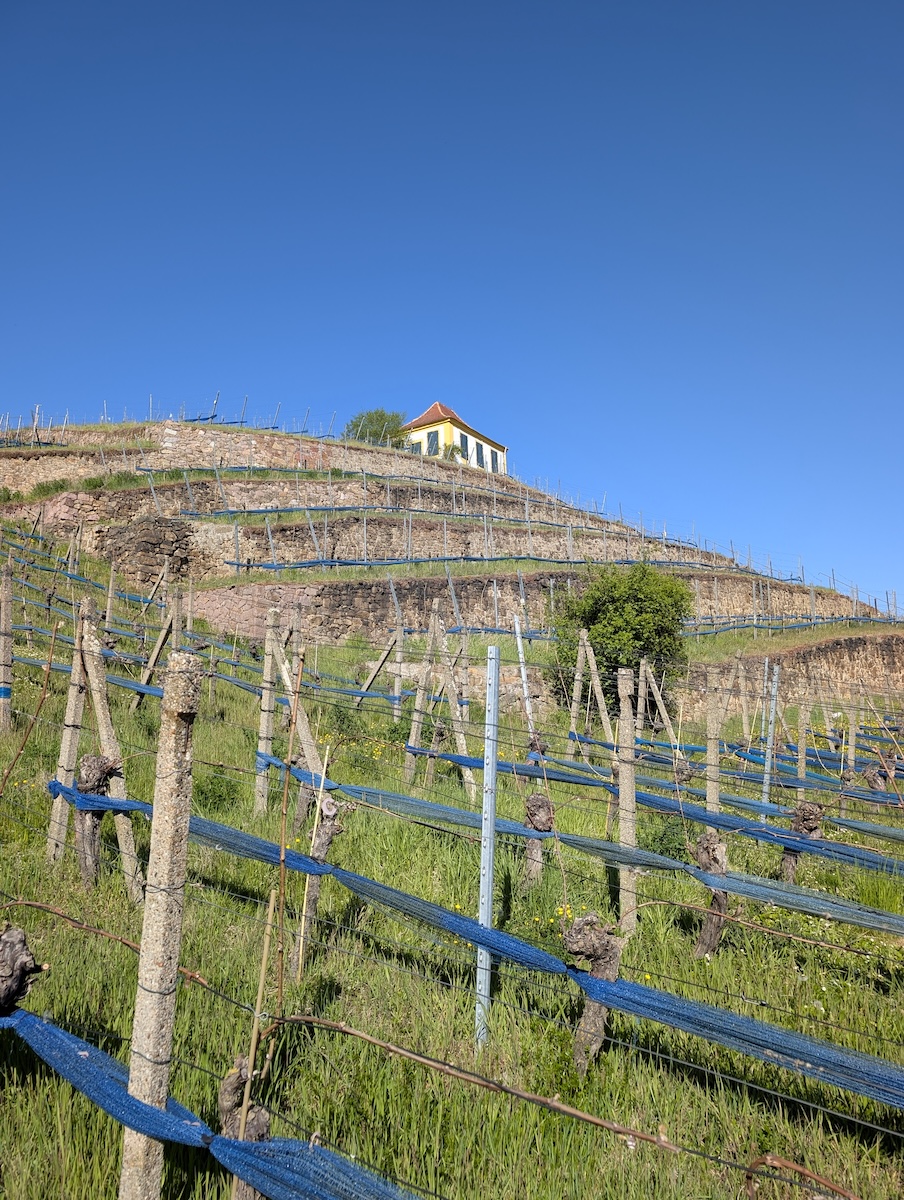
In Saxony, Schloss Proschwitz carries more historical weight. The vineyard above the Elbe has loess over granite and syenite, good exposure, water-holding capacity and a direct connection to the estate’s story of repurchase and restoration after 1990. A wine from Proschwitz is therefore never only a geological statement. It belongs to a restored estate and a public cultural setting.
Pillnitzer Königlicher Weinberg at Zimmerling is different again. It is close to the estate’s cellar, press house and vinothek, and the geology includes weathered granite and gneiss at the edge of the Lusatian granite fault. But for a visitor, the vineyard is not separated from the winery’s built world. It is part of the same experience: steep slopes, astonishing sculpture, handwork, artistic cellar, labels, bottles.
These sites do not solve the region’s visibility problem by themselves, give the story a grounded base. Without them, Saxony and Saale-Unstrut can look like a scenic patchwork. With them, we begin to see where the strongest wines are emerging from.
Wine meets artistic talent: Zimmerling
Zimmerling needs to be written about carefully because it is very easy to turn it into a decorative story about “art and wine”. While the artistic part of the estate is so real I can easily call it one of the most beautiful wine estates on Earth, but it is not a gallery with vines attached. Klaus Zimmerling’s own explanation is more practical: during the GDR period, he missed exciting wines and wanted to see whether something else was possible. The estate is small, about 4.5 hectares, with Riesling, Weissburgunder, Grauburgunder, Kerner, Gewürztraminer and Traminer, organic-certified. The work is manual to a degree that matters: pruning, canopy work, harvest and many other operations done by hand and looking at the slopes it’s easy to see why. In the cellar, Zimmerling uses Italian basket presses with very low pressure, keeps to one pressing, works with maceration, does not destem, avoids wood and uses stainless steel.
That explains more about the wines than any romantic language would. They are not built around oak, polish or technical gloss. They often feel concentrated because the yields are low and the fruit is physiologically ripe. Zimmerling himself talks about 25 to 35 hectolitres per hectare even for basic wines. He also accepts discreet residual sweetness when the vintage leads there. A Riesling R from Zimmerling, for example, is often discussed not as a sharp, linear Riesling but as something riper, broader and more textural, with yellow fruit, citrus, spice and a density that can surprise people expecting the usual German Riesling register. The “R” wines are a useful introduction because they show the estate’s preference for intensity without relying on wood.
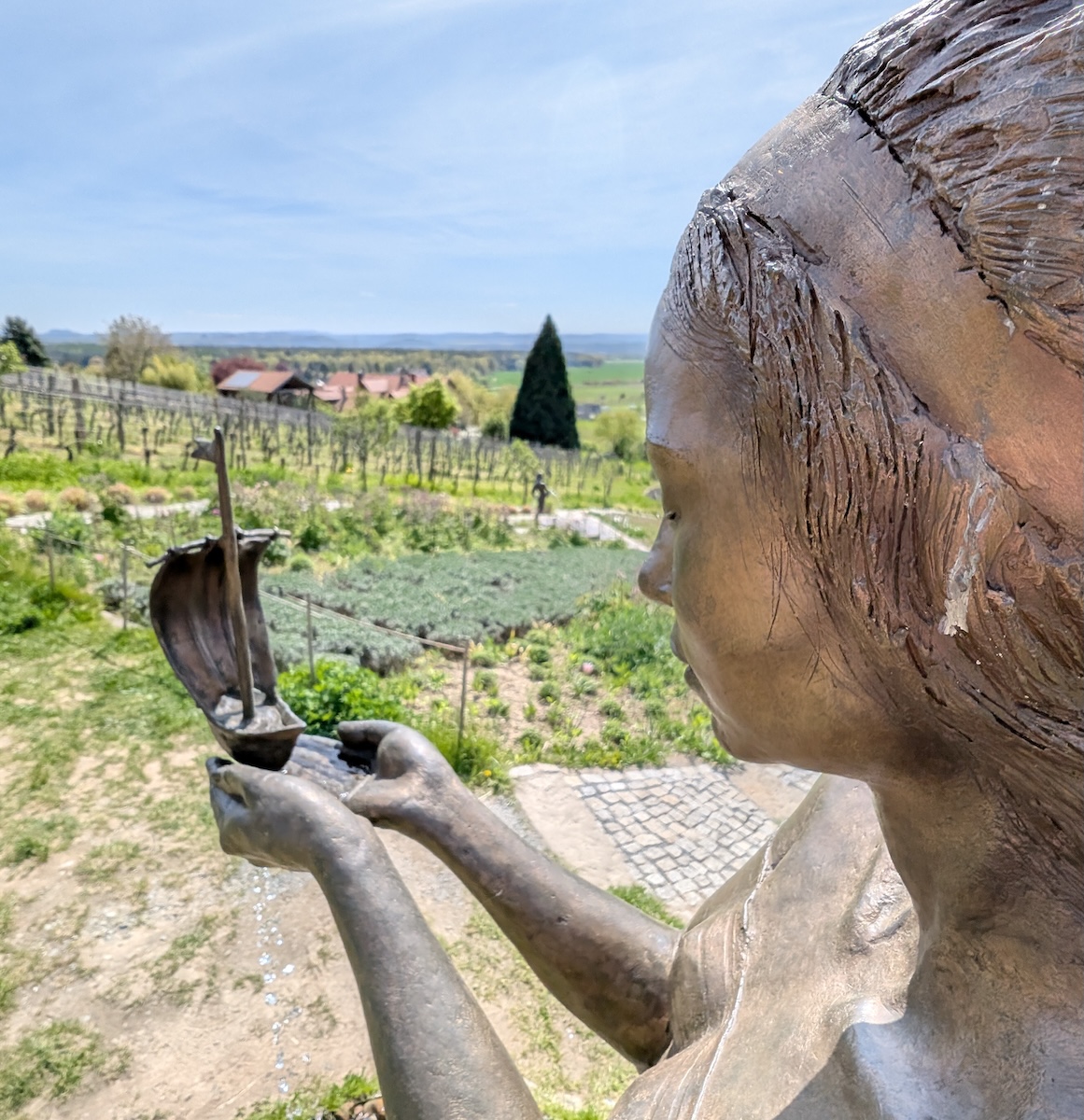
The architecture and sculpture change the visit because they make the estate memorable before the first glass is finished. Malgorzata Chodakowska’s sculptures appear on labels and in the winery environment, but they don’t sit there as branding. They form part of the way the place is organized. For visitors who respond to that, Zimmerling becomes one of the region’s most vivid addresses because the wines, building, vineyard and art are all speaking in the same physical space.
A place for prince: Schloss Proschwitz – Prinz zur Lippe
Schloss Proschwitz works on a completely different scale. Dr. Georg Prinz zur Lippe is the owner and public face of the estate; Alexey Ryabov is the cellar master. The estate has more than seventy hectares, which makes it very large in this regional context, and its role cannot be reduced to a few bottles. It is a winery, a restored family property, a cultural site, an events address and one of Saxony’s most visible wine institutions.
The modern story begins with return and repurchase. After the family lost its Saxon property after the Second World War, Dr. Georg Prinz zur Lippe came back after the fall of the Berlin Wall and began rebuilding the winery around the former family vineyards in Proschwitz. This affects the entire structure of the estate. Proschwitz has to carry history in public. It has to present Saxony to visitors who may know little about the region. It has to make wines across a wide range of categories while maintaining enough identity that the estate doesn’t feel like a general-purpose Saxon brand.
The grape list is broad: Grauburgunder, Müller-Thurgau, Weissburgunder, Scheurebe, Elbling, Goldriesling, Spätburgunder, Dornfelder and others. Proschwitz also makes Sekt and is in organic conversion. The estate’s own description of its style is useful because it avoids trying to sound like another region. Dr. Georg Prinz zur Lippe points to the continental climate, loess over metamorphic rock, red granite and syenite, and speaks about delicacy, filigree and complexity, with the Pinot family particularly suited to the conditions.
Goldriesling has to appear here because it is one of the clearest Saxony signals in the portfolio. You’d probably place it in the accessible, fresh, regional category rather than as a monumental wine, which is exactly how it should be treated. It can show light fruit, floral tones and a straightforward Saxon identity. The more ambitious Proschwitz wines, especially from Schloss Proschwitz and Kloster Heilig Kreuz, belong in another register. The estate itself often points to Spätburgunder, Traminer-Riesling and the Grosse Gewächse as wines that show more of the vineyard structure. A Proschwitz Spätburgunder from a classified site, when successful, is less about power than about measured red fruit, fine acidity and the slightly cool contour that Saxony can offer.
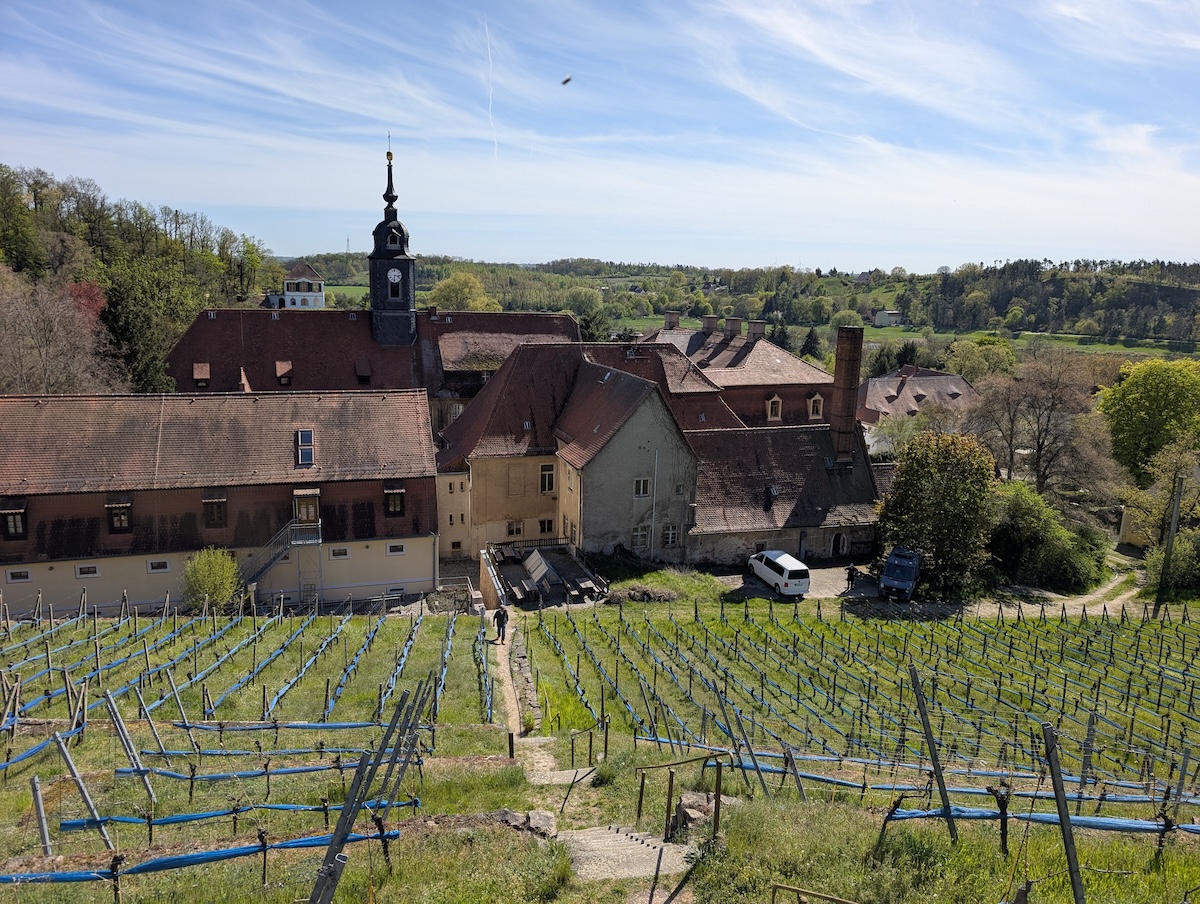
Architecturally, Proschwitz gives the region something the smaller estates cannot: a large cultural address. The vineyard view toward Meißen, the castle ensemble, the Chinese Pavilion and the connection to Dresden’s visitor economy all matter. In a region still fighting for recognition, that visibility is not cosmetic. It brings people who might not travel for a vineyard name alone.
Martin Schwarz and Meißen vibes
Martin Schwarz belongs to the same Saxon landscape as Proschwitz, but his route is smaller and more cellar-driven. Schwarz studied in Geisenheim, worked in European wine regions, became cellar master at the re-established Schloss Proschwitz in 1996, and helped shape that estate’s wines for more than fifteen years. In 2002, with Grit Geißler, he began building his own project while still working at Proschwitz. After ten years vinifying the wines in the Proschwitz cellars, he became fully independent in 2013 and set up in Meißen.
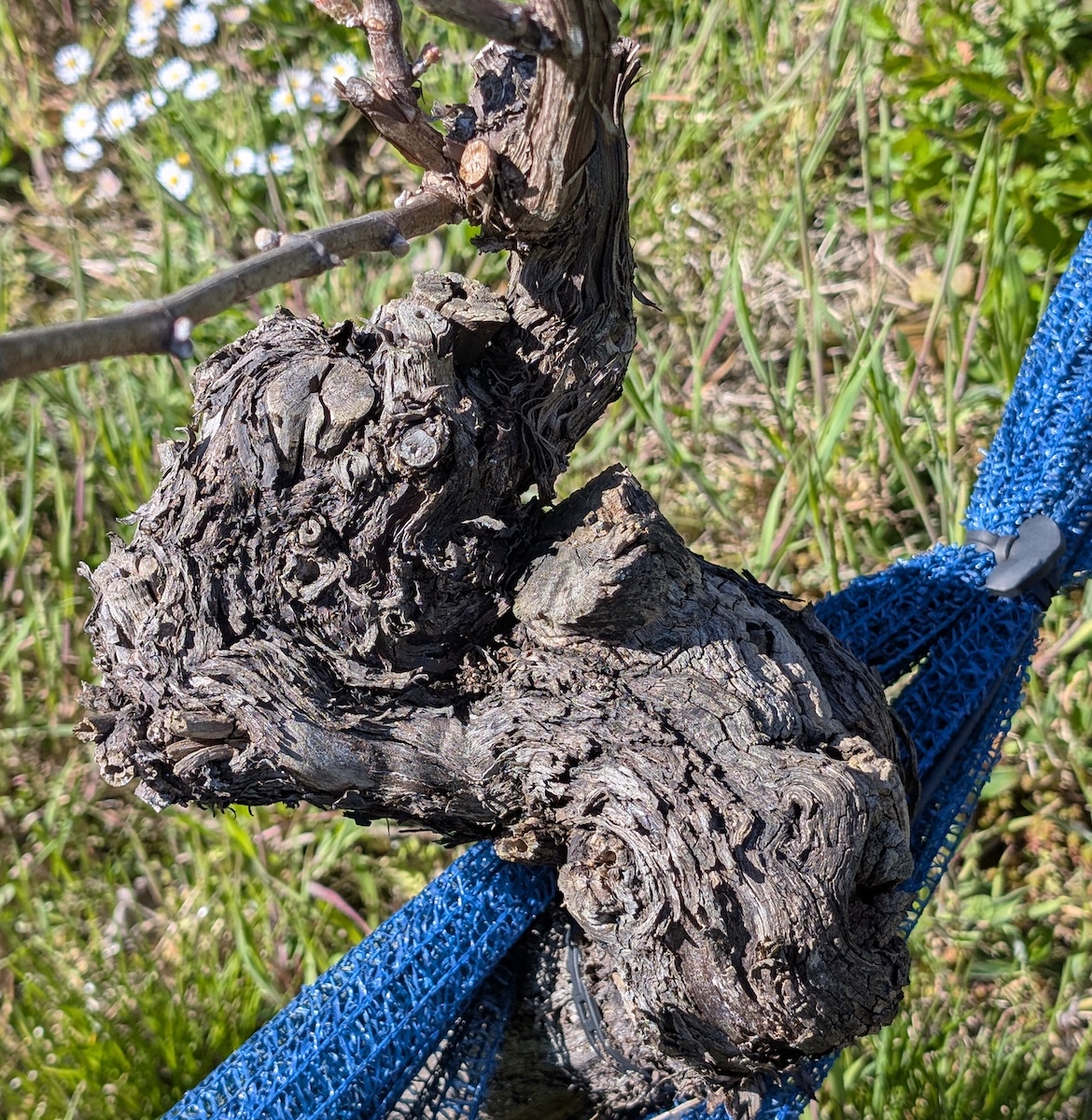
That background gives the estate practical credibility. It comes from years inside the region’s main institutional cellar, then from the decision to work smaller. The vineyards include terraced sites in Radebeul such as Goldener Wagen, Johannisberg and Steinrücken, with weathered granite, syenite and porphyry, and the Meißner Kapitelberg on granite and syenite. These are not easy vineyards to farm, and the appeal of Schwarz’s wines is connected to that physical limitation: small lots, steep sites, hand decisions, less room for formula.
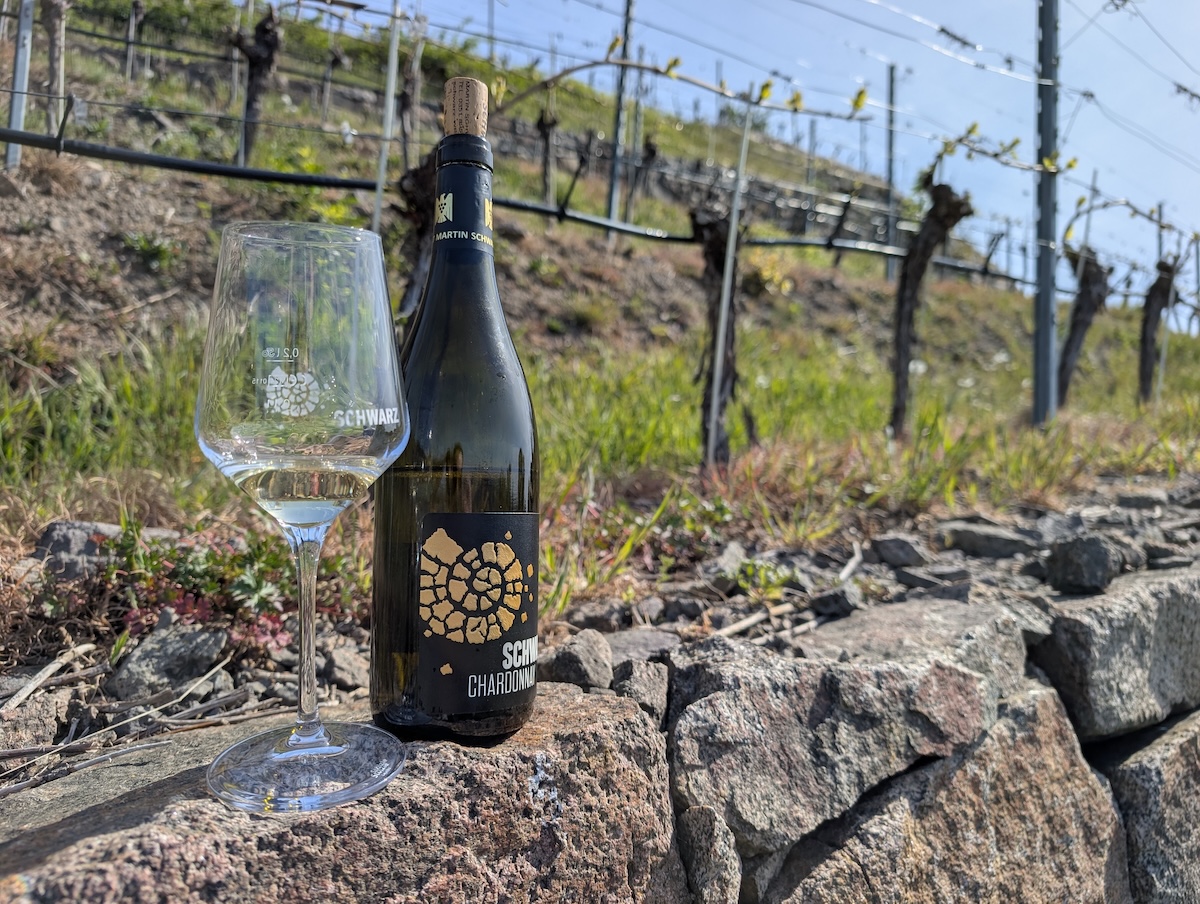
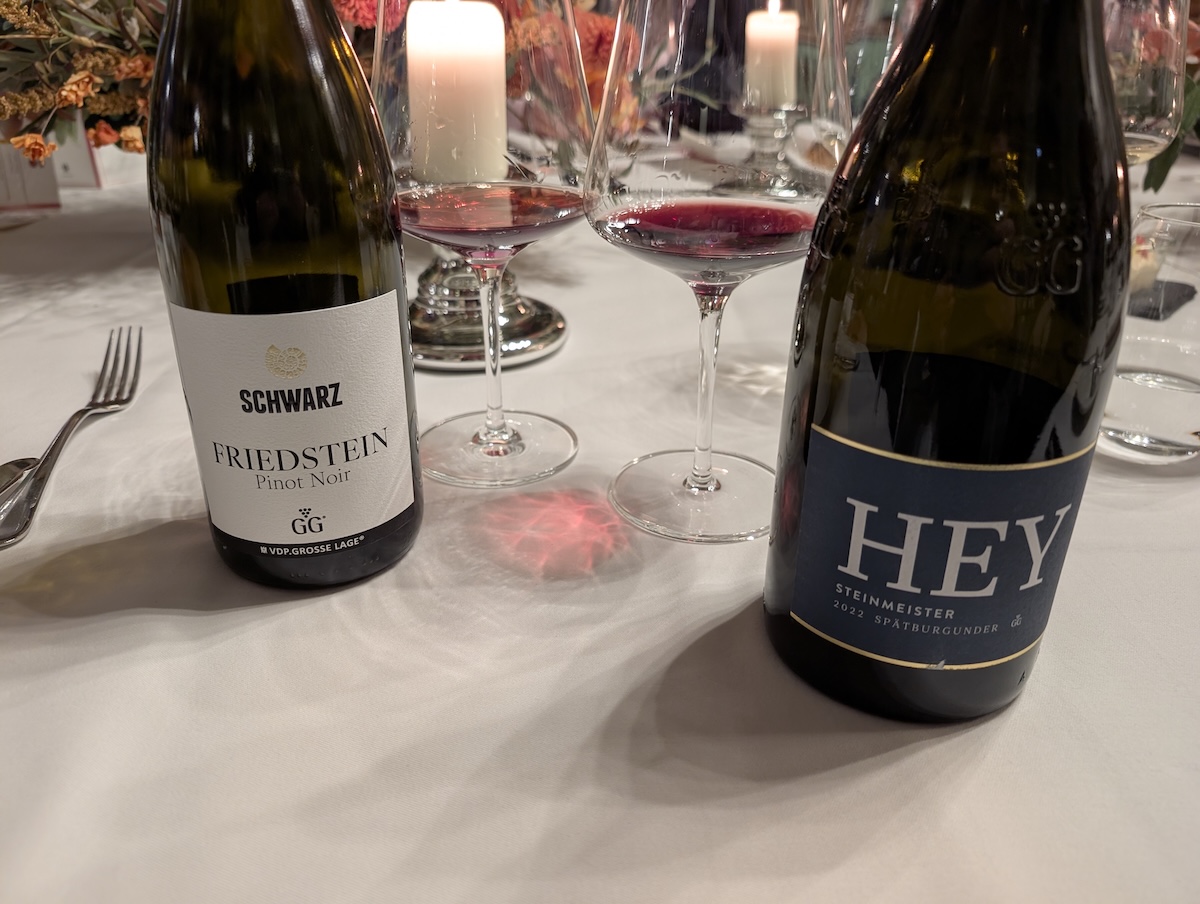
Schwarz’s white wines have a clear following, especially the Weissburgunder-Grauburgunder and Riesling-Traminer blends, but Spätburgunder is the most useful wine to bring up because it shows where Saxon red wine can go. Pinot Noir reveals damson, cherry, tea, fine oak spice, compact fruit and restrained extraction. Elegance, texture, red and dark cherry fruit, spice: the wine is serious without being heavy. Pinot Noir Friedstein and the estate’s Spätburgunder bottlings are good examples because they don’t rely on the surprise of “red wine from eastern Germany”.
The estate also prevents the Saxon VDP story from becoming only about castles, restitution and visitor architecture. Schwarz is closer to a grower-craftsman model. The build-up is slow, the scale is modest, the cellar identity is tied to experience rather than spectacle. For Saxony, that is important evidence: quality can come from terraced vineyard work and focused cellar discipline outside the large institutional estates.
Pawis’ hospitality flex
Pawis is one of the key estates for understanding Saale-Unstrut after 1990. Bernard Pawis describes the family story plainly: his father grew the winery from a small side business after the fall of the Berlin Wall; after rapid development, the estate moved into a self-restored former monastery property on the Zscheiplitzer Martinsberg. The setting is not incidental. From the thousand-year-old monastery church there is a view toward Freyburg and Neuenburg Castle. The estate also has a restored guest environment, holiday apartments and a fountain house built around a 500-year-old, 90-meters-deep well. In a region dependent on visitors, that kind of physical presence matters.
The wine style is deliberately approachable but not careless. Pawis emphasises dry vinification and varietal typicity, while also accepting that Saale-Unstrut is a region of many grapes. Bernard Pawis recommends Müller-Thurgau or a mineral Riesling from shell limestone as an introduction. That is useful because it avoids the prestige reflex. Müller-Thurgau remains culturally important in Saale-Unstrut, and treating it as merely a minor grape misses the local reality. At the same time, the estate’s Grosse Gewächse show the more ambitious side.
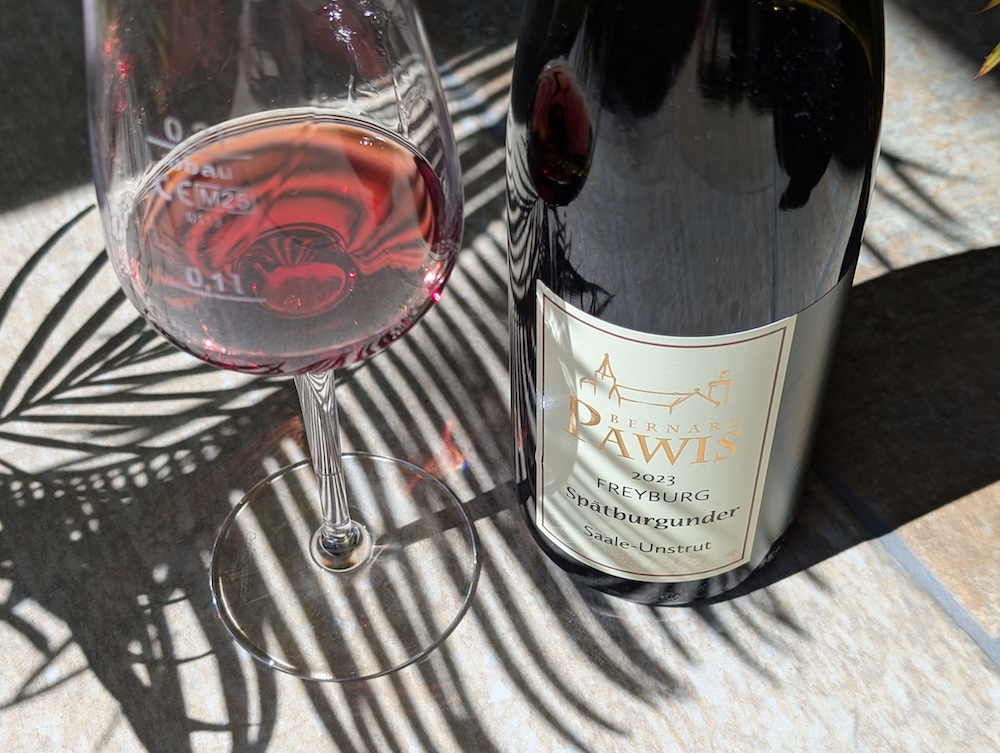
Freyburger Edelacker is the obvious place to look. A Pawis Edelacker Weissburgunder GG tends to be received as a textured, full-bodied Pinot Blanc rather than a fragile northern white: ripe pear, mirabelle, mandarin, nutty tones, creaminess, pastry or butter-cream notes, with acidity keeping the wine from becoming soft. That is a believable profile for Weissburgunder from a warm shell-limestone site: not aromatic fireworks, but volume, stone fruit, gentle savouriness and a finish that should carry the weight.
Pawis’s well established tourism operations is partly what makes Saale-Unstrut look operationally complete. There is family continuity, a restored estate, serious classified-site wine, hospitality and a broad enough range to speak to visitors who are not wine specialists. It is not the most eccentric estate in the group, nor it needs to be. It gives the region a dependable centre of gravity.
The steep side of Hey
Hey, in Naumburg, brings a more contemporary rhythm to Saale-Unstrut. Matthias Hey owns the estate and is also the cellar master. The family bought the winery in 2001; Matthias later studied oenology in Geisenheim and returned to develop the estate. The location matters: at the foot of the historic Naumburger Steinmeister terraces, with the incredibly steep vineyards directly behind the estate and a courtyard that is part of the visitor experience. Hey is very open about the hospitality side. Wine, culture and food are part of the same proposition.
The technical direction is more precise than the casual hospitality language might suggest. Hey has become unusually Riesling-focused for Saale-Unstrut, with about half the vineyard area planted to the variety. Matthias says his early skepticism about Riesling turned into commitment as he understood what shell limestone and red sandstone could give it: spice, complexity and a profile clearly different from the established regions. In the cellar, he speaks of spontaneous and slow fermentation, long maceration and giving wines time rather than pushing them quickly into bottle.
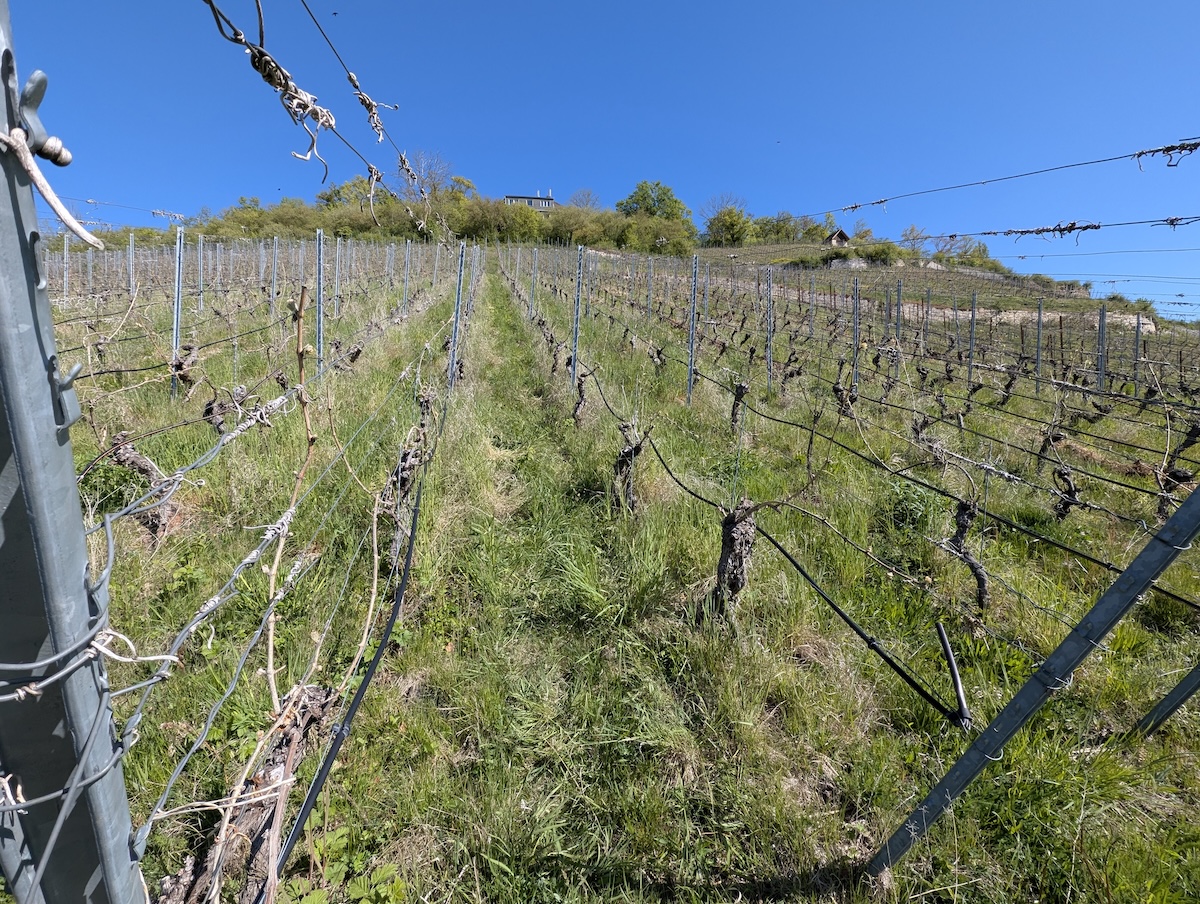
The estate’s “Weisser Hey” is useful as an introduction because it explains the house without demanding specialist attention: Silvaner, Riesling and Weissburgunder in changing proportions, meant to sit between easy drinking and complexity. But the more serious regional argument comes from Naumburger Steinmeister. A Steinmeister Riesling GG should be discussed in terms of white peach, citrus, elderflower, spice, salt or herbal notes, with enough body to avoid thinness and enough acidity to keep the line. Some versions see partial oak fermentation and ageing, which can give width without making the wine taste like a wood project.
Hey’s boutique-like strength is that it makes Naumburg feel current. A visitor can understand the vineyard, taste the wines, eat, and see how a young estate builds a regional identity through more than bottles alone. In Saale-Unstrut, that is not a small point. The region needs estates that can translate local quality into an experience strong enough to make people return.
The boutique vibes of Böhme & Töchter
Böhme & Töchter is small, and the scale should not be inflated. The estate began with family plantings in Gleina in 1986. Today the Böhme family owns it, while Marika and Sandro Sperk are the cellar masters and the active younger-generation force. They studied and travelled, including Geisenheim, then returned to the family estate. The VDP admitted Böhme & Töchter in 2022, together with Martin Schwarz, and that timing says something about the regional association’s direction: more focus on estates that work sharply with place, even when the holdings are small.
The key site is the Freyburger Schweigenberg within the Freyburger Edelacker. South-facing steep slopes, weathered shell limestone, a warm microclimate influenced by the Unstrut, and the presence of Mediterranean plants such as wild thyme and rock sorrel. This is not just pretty botany. It explains why the estate concentrates on Weissburgunder, Chardonnay, Riesling and Spätburgunder. These grapes can translate warmth, limestone and slope without needing excessive ripeness.
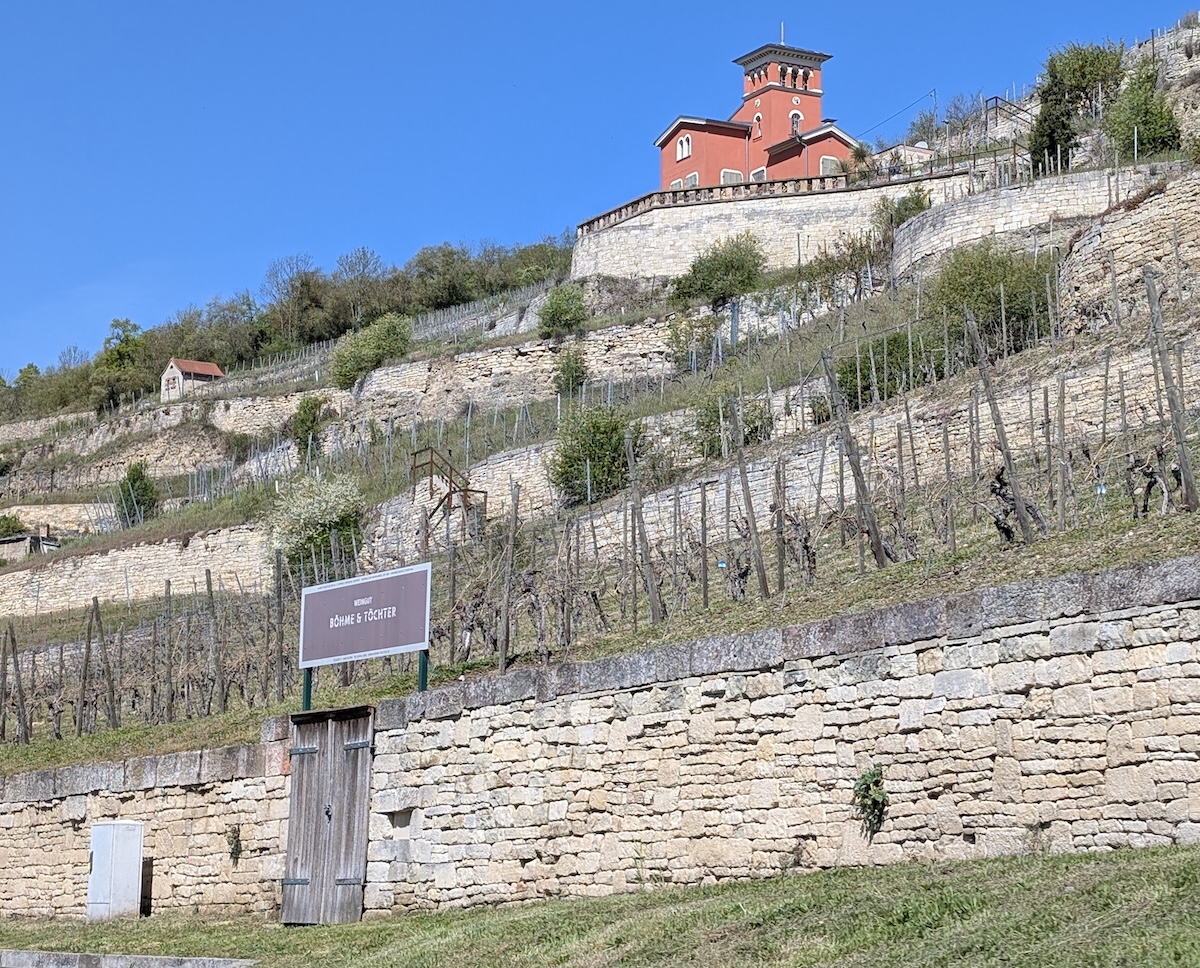
Marika and Sandro’s cellar language is also worth taking seriously. They use steel, but increasingly rely on longer maceration, spontaneous fermentation, oak barrels and judgement by taste rather than recipe. Their recommended introduction is the Weissburgunder Ortswein: dry, taut, straightforward, with chalky minerality. That is probably the right doorway into the estate. For a more ambitious bottle, the Chardonnay from Freyburger Schweigenberg is important because Sandro Sperk has described planting Chardonnay there in 2008 as a deliberate, pioneering step. Impressions of the estate’s better whites tend to sit around structure rather than perfume: chalk, citrus, yellow fruit, texture, a dry line and the kind of grip that makes the wine feel more site-led than varietal-led.
Böhme & Töchter also matters architecturally, but not in the showpiece sense. The estate speaks about renovating the four-sided farm in Gleina and preserving steep-terrace culture. That is a different kind of building story from Zimmerling or Proschwitz. Less spectacular, more agricultural. It fits the wines: compact, local, still being refined.
The eastern Germany’s vibe in essence
By the end of a visit, Saxony and Saale-Unstrut are easier to understand if one stops looking for a single headline. They are too small, too fragmented and too varied for that. The wines come from old regions, but the modern private-estate culture is still being rebuilt. The vineyards can be beautiful, but the work behind them is exposed to frost, drought, small volumes and a market that no longer buys wine just because it exists. The grapes also refuse a simple message. Riesling matters, but so do Weissburgunder, Grauburgunder, Chardonnay, Müller-Thurgau, Spätburgunder, Traminer, Gewürztraminer, Silvaner and Goldriesling.
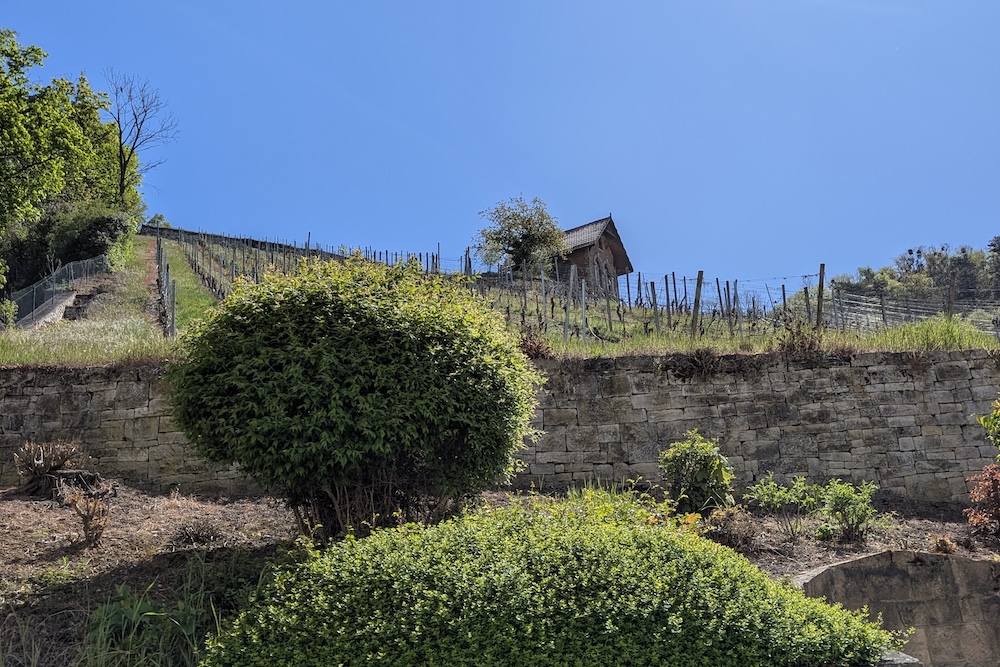
For a traveller, that variety is a strength. Saxony gives the Elbe, Dresden, Pillnitz, Meißen, restored estates, terraces, castles, sculpture and the feeling that wine belongs inside a larger cultural landscape. Saale-Unstrut gives Naumburg, Freyburg, limestone slopes, old farms, vineyard houses, cooperative history and a more northern, rural vibe. A visitor can move from Zimmerling’s sculptural world to the public scale of Proschwitz, from Schwarz’s terraced precision to Pawis’s restored monastery setting, then to Hey’s Naumburg rhythm and Böhme & Töchter’s tighter Edelacker focus.
For someone who won’t travel there, the bottle has to do more work. The useful first step is not to search for “the best wine of eastern Germany”, but to choose a clear entry point. Zimmerling can show the region’s handmade, textural, artistic side through Riesling or Traminer. Proschwitz can introduce Saxony through Goldriesling, Sekt or classified-site Pinot-family wines. Schwarz is a good address for Spätburgunder that leans on delicacy rather than weight. Pawis gives Saale-Unstrut a reliable route into Edelacker Weissburgunder. Hey makes Naumburg’s Steinmeister understandable through Riesling with spice, structure and mineral grip. Böhme & Töchter points toward the next, more compact version of the region: Chardonnay, Weissburgunder and Spätburgunder shaped by shell limestone and careful cellar work.
Saxony and Saale-Unstrut don’t need to be oversold: they are small, local, still unevenly discussed, and far from replacing Germany’s famous western regions. But the best bottles no longer taste like curiosities; they taste like wines from places that had to work harder to be understood. For travelers, that means one of Germany’s more distinctive wine routes; for drinkers at home, it means a bottle with freshness, texture, history and no ready-made script.